

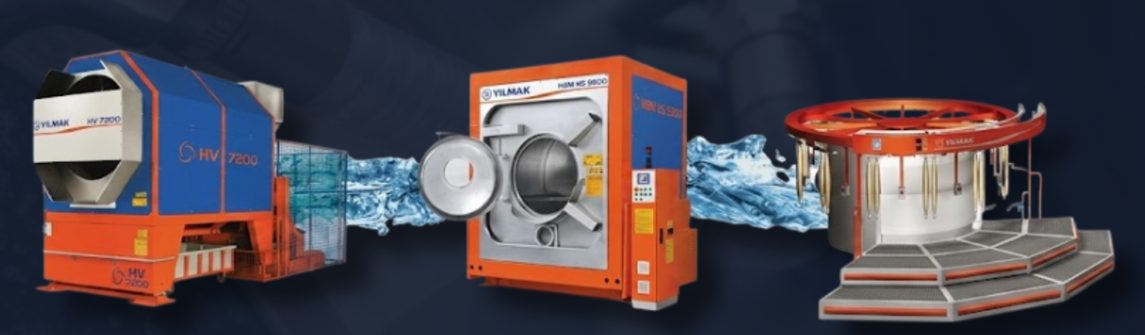
Yılmak Machinery was founded in 1999 to design and produce the washing and dyeing units that the textile and garment sectors need — beginning with the equipment Yılteks itself required, then serving the wider industry.
How this company works
Turkish machinery manufacturing has grown rapidly in both production and export since the 1990s, and the value-added performance of the sector today outpaces many other manufacturing branches. Private-capital companies founded in the 1960s gave the industry its momentum, and public enterprises have largely handed their place to private-sector firms.

Designed for our own plants first
Yılmak began by building the washing and dyeing units that Yılteks itself needed, then opened that engineering to the industry.

Manufactured and commissioned
Machines are produced, installed and commissioned with the engineering service the sector needs to run them.
If the machine we need does not exist, we design and build it.
Why this matters for your order
Owning the machinery means the group is never waiting on a supplier to solve a production problem.
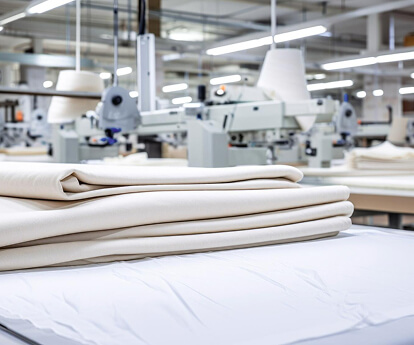
Engineering in the family
Washing and dyeing units designed and produced for the textile and garment industry.
- In-house design and build
- Spare parts and service
- Export to global markets
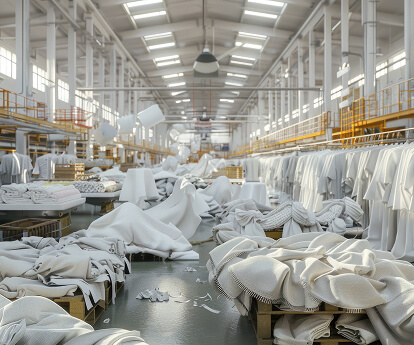
Machines that match the process
Equipment specified around real production conditions rather than a catalogue.
- Water-recovery systems
- Eco-friendly washing units
- Continuous machinery investment
Frequently asked questions
500 pieces per style, per colour. Below that we can still develop samples and run a proto programme so a capsule drop is never blocked by quantity.
Denim and non-denim trousers, jackets, shorts, skirts and shirts.
Yes. Washing and garment dyeing have been our core business since 1968, with our own laboratory, R&D team and 45,000 m² of closed area in Türkiye.
amfori BSCI, SLCP, IDFL, ISO, Cascale, Textile Exchange (GRS and OCS), Sedex, WRAP and OEKO-TEX. Full certificate scans are shared on request.
Production in the Port Said Public Free Zone started in June 2026, with a monthly capacity of 300,000–400,000 denim and non-denim garments.